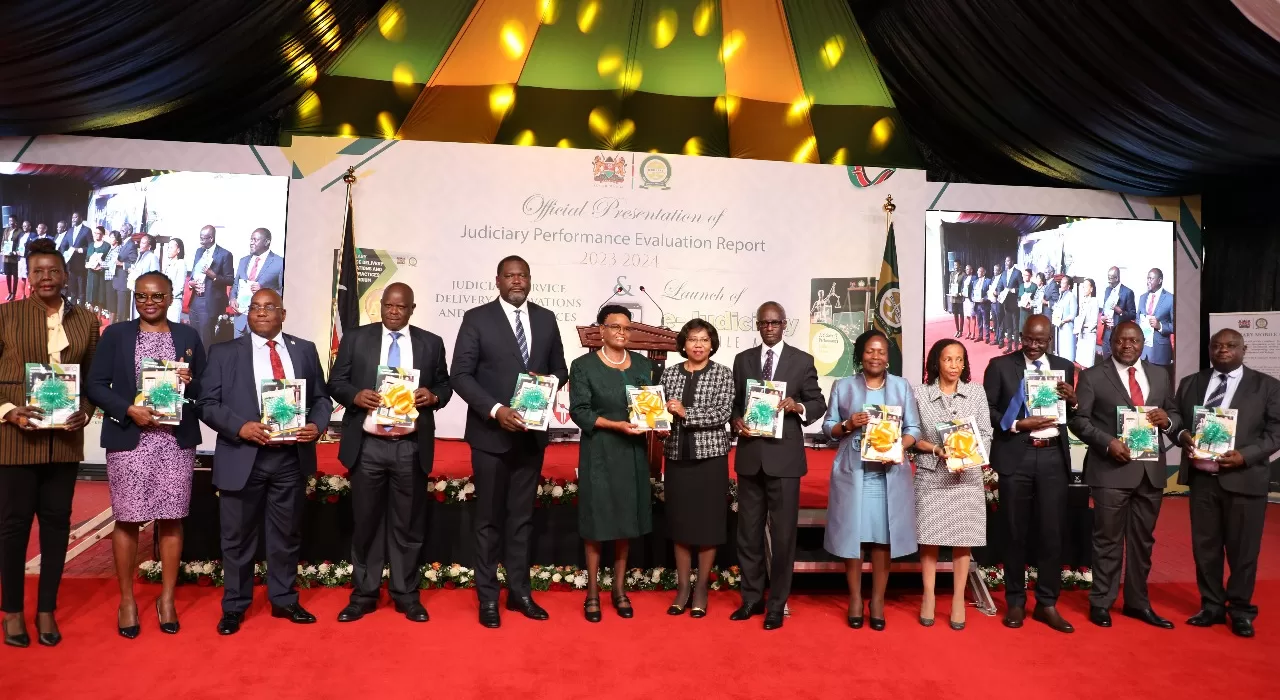
Chief Justice Martha Koome has called on the Executive and Parliament to increase budgetary allocations to the Judiciary, emphasizing that adequate funding is essential for effective and accessible justice delivery.
Speaking during the launch of the E-Judiciary Mobile Application, the Judiciary Innovations Compendium, and the 2023–2024 Performance Management and Measurement Evaluation (PMMU) Report, CJ Koome highlighted the ongoing challenges facing the Judiciary. These include severe shortages of judges and judicial officers, mounting caseloads, inadequate infrastructure, and critical shortfalls in both human and financial resources.
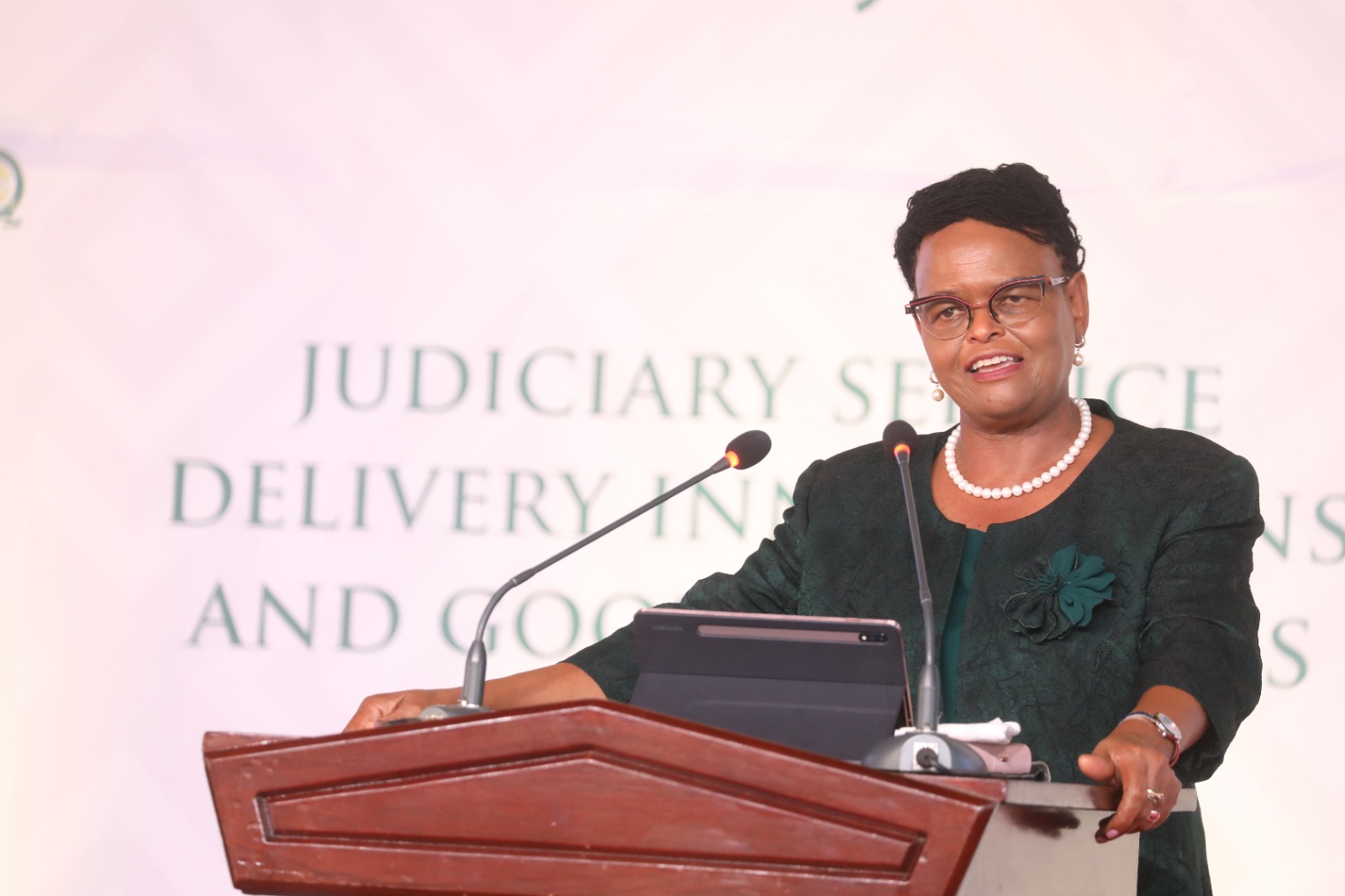
“As many of you are aware, the Judiciary has persistently raised concerns over underfunding and frequent budget cuts, which have hindered the full implementation of our core programs,” said CJ Koome.
Despite these constraints, the Judiciary has made notable strides. In the 2023/2024 evaluation period, it established five new High Court stations, three additional Divisions of the Employment and Labour Relations Court, three new Environment and Land Court stations, three new Magistrates’ Courts, and 28 Small Claims Courts measures aimed at decentralizing access to justice under the STAJ (Social Transformation through Access to Justice) framework.
To address backlogs and improve efficiency, the Judiciary expanded the “Mahakama Popote” initiative an innovative virtual court system that enables less-burdened judicial officers to assist colleagues in busier courts remotely. Additionally, continued investment in Court-Annexed Mediation (CAM) and Alternative Justice Systems (AJS) contributed to a reduction in the case backlog from 268,116 to 244,267 cases.
Looking ahead, CJ Koome reaffirmed the Judiciary’s commitment to refining its services and ensuring a justice system that remains inclusive, responsive, and aligned with the evolving needs of the public.
The launch of the Judiciary Mobile App and other digital tools, she noted, reflects a commitment to transparency, accountability, and innovation. “These tools reaffirm our resolve to uphold the values of equity, integrity, efficiency, and access to justice,” she said.
The E-Judiciary Mobile Application marks a significant leap in bringing court services directly to the public, enabling smartphone users to access real-time case updates, court schedules, rulings, and other judicial services from their devices. The Innovation Compendium showcases creative solutions adopted by courts nationwide to enhance service delivery.
CJ Koome also emphasized the need for all actors in the justice sector to support digitization and automation efforts, stating, “The justice system is only as strong as its weakest link.”
The PMMU Report, compiled through data collected from 337 courts and administrative units, offers a comprehensive and evidence-based assessment of Judiciary performance. It outlines current institutional standings and highlights areas requiring attention to enhance justice delivery.
Justice Antony Mrima, representing the Chairperson of the Judicial Service Commission’s Committee on Administration of Justice, reiterated the Commission’s commitment to ensuring that the PMMU framework remains objective and scientific. He noted ongoing efforts to enhance its credibility through the use of data analytics and standardized performance metrics.
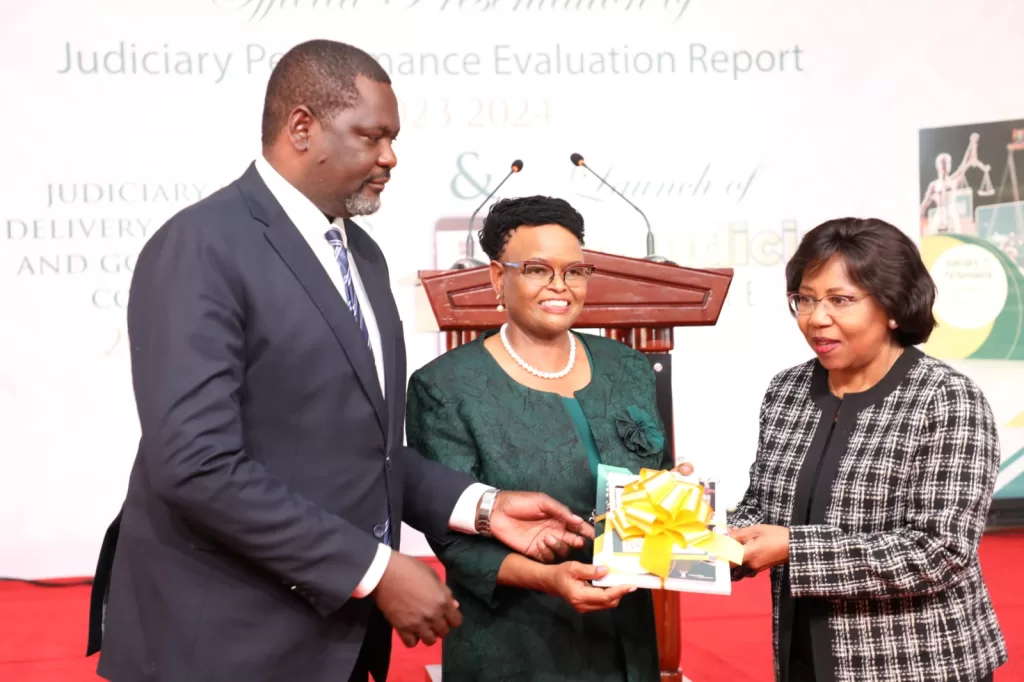
Justice Agnes Murgor, Chair of the Administration of Justice and Performance Management Committee (AJPMC), described the release of the 9th PMMU Evaluation Report as a milestone in promoting institutional accountability and performance excellence. “This is more than just data, it’s an opportunity to reflect, confront challenges, and renew our dedication to delivering justice with fairness and dignity,” she said.
Chief Registrar of the Judiciary, Winfridah Mokaya, echoed these sentiments, stating that the PMMU framework continues to play a vital role in performance evaluation and strategic planning. She praised the Mobile Application as a transformative innovation that redefines how justice is delivered in the digital age.
“With this App, court users across the country can now access a wide range of judicial services, including real-time case updates, calendars, and rulings right from their mobile phones,” Mokaya said.
She concluded by underscoring that challenges such as inconsistent funding, a shortage of judicial personnel, and low uptake of pro bono services point to a broader national issue: the urgent need to prioritize and fund justice as a fundamental public good