By: Cyrus Kimanga
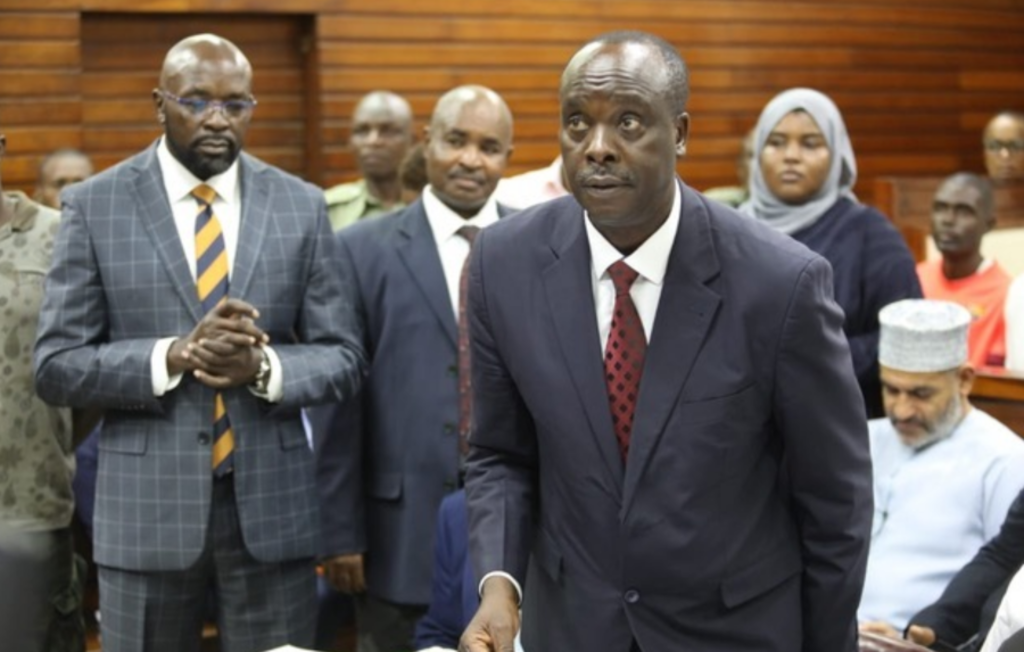
A sombre mood engulfed a Nairobi court on Wednesday after it observed 30 seconds of silence following the death of a suspect linked to BBC blood Parliament documentary arising from the June 2024 anti-finance protests, during which Gen Z demonstrators stormed the National Assembly.
The matter, a miscellaneous application that has been pending before the court since 2025, had been scheduled for mention to allow the Directorate of Criminal Investigations (DCI) to update the court on the status of investigations.
However, when the case was called out, defense lawyer Ian Mutiso informed the court that one of the suspects, filmmaker Nicholas Wambugu, had died earlier that morning while undergoing treatment at a Nairobi hospital.
Presiding magistrate Otieno Wambo noted that the law does not expressly provide guidance on how courts should respond to the death of a suspect during ongoing proceedings.
“When you lose someone from your court, do you observe silence? Because when you hear a case for some time, you get to know the people. The law is very silent on this,” the magistrate remarked.
Mr Mutiso then sought the court’s permission to observe a moment of silence in honor of the deceased. The court allowed members of the bar and other court users to observe 30 seconds of silence.
Wambugu had been charged alongside fellow filmmakers Brian Adagala, Mark Denver Karubiu, and Christopher Wamae. The four were arrested in May 2025 and detained at Muthaiga Police Station following the release of a BBC documentary.
The exposé detailed how security forces allegedly opened fire on anti-tax protesters outside Parliament in June 2024, leaving several people dead and others injured.
The suspects were arraigned under a miscellaneous application filed by the DCI, which remains active to date. However, no formal charges have been preferred against them by the Office of the Director of Public Prosecutions (ODPP). They are currently out on bail under court-imposed conditions.
The case later took a dramatic turn after Mr Mutiso accused DCI officers of illegally installing spyware on the suspects’ electronic devices while they were in police custody.
The court heard that surveillance software was secretly planted on the gadgets during the period they were held by investigators.
A forensic report by the University of Toronto’s Citizen Lab, which was presented in court, confirmed that one of the filmmakers’ mobile phones had been infected with the commercial spyware FlexiSPY while in police custody.
According to the report, Wambugu’s phone was confiscated on May 2, 2025, and returned to him on July 10, 2025. Analysis showed that FlexiSPY was installed on the device on May 21, 2025, at around 6:30pm, a time when the phone was under state custody.
The court was told that FlexiSPY is a powerful surveillance tool capable of recording calls, tracking messages and locations, capturing screenshots, remotely activating microphones, and deleting or altering data. The software has previously been linked to state surveillance operations, the targeting of journalists and activists, and criminal networks.
Citizen Lab researchers further noted that while their analysis confirmed the presence of FlexiSPY, they could not rule out the possibility that additional spyware or data manipulation may have occurred while the phone remained in police custody
The case remains active before the court.