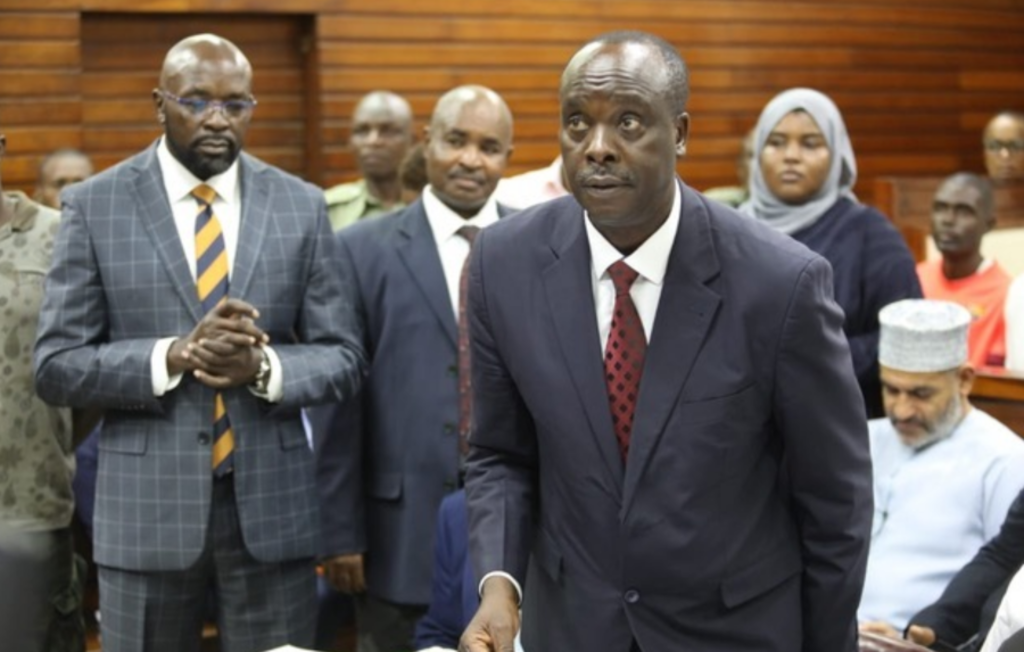
The High Court in Nairobi has issued interim orders restraining Mugithi musician Samuel Muchoki Ndirangu, popularly known as Samidoh, from contacting or interfering with a woman who has accused him of rape.
Justice Lawrence Mugambi has directed that the musician, either by himself or through his agents, be barred from harassing, intimidating, or otherwise engaging with the woman, who has been identified in court papers only by the initials M.R.W. to protect her dignity and security.
The judge further ordered that her identity be redacted in all pleadings and documents, and where necessary, court proceedings will be conducted in camera.
In her petition, filed through Kaaya Memba & Company Advocates, M.R.W. accuses the musician of sexually assaulting her and has asked the court to compel investigations and ensure the preservation of evidence. She claims to have preserved digital evidence of the assault and subsequent communication with Samidoh, including audio recordings and electronic messages in which he allegedly insulted and threatened her.
In one exchange, she says he dismissed her confrontation over the incident by calling her a “professional prostitute.”
The petitioner alleges that between 2021 and 2023, Samidoh engaged in manipulative and coercive communication with her, alternating between feigned friendliness and intimidation. She is seeking urgent orders directing the police to register her complaint, preserve her evidence, and instructions to the Attorney General to initiate mutual legal assistance with U.S. authorities for certified police and prosecutorial records. She also wants the Witness Protection Agency to assess her risk and offer protection, citing fear of harassment and intimidation.
Justice Mugambi ordered police to forensically secure and preserve all relevant documentary, digital, and electronic materials, including the woman’s audio and messaging evidence, and directed that written preservation notices be issued to custodians immediately. The petition and accompanying application are to be served personally or through a nationwide newspaper within seven days. Responses are to be filed within seven days of service, with rejoinders allowed within the same timeframe.
M.R.W. contends that the state’s failure to act on her complaint has violated her constitutional rights, including the right to dignity, equality, freedom and security of the person, fair administrative action, and access to justice.