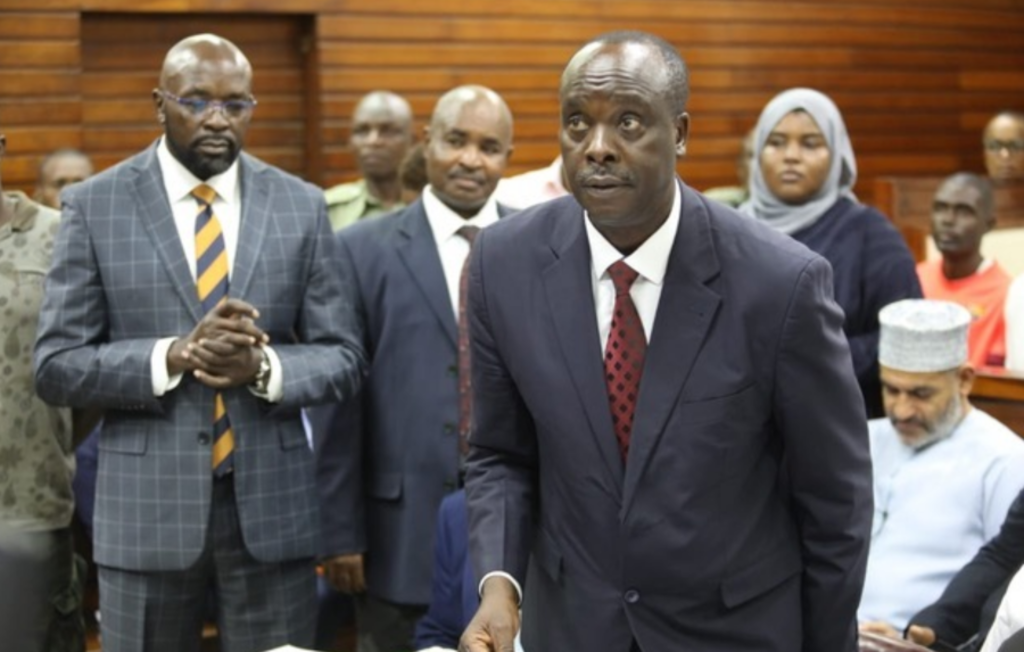
NCBA Group PLC has suffered a setback after the High Court declined to stay a judgment that annulled the 2019 stamp duty exemption granted to the merger between NIC Group PLC and Commercial Bank of Africa (CBA).
“The application is declined and dismissed,” court noted
Justice Chacha Mwita on dismissed NCBA application for a stay of execution, ruling that it had not demonstrated any risk of suffering irreparable loss if the judgment is implemented pending appeal.
“Whether the court was right in it desicion are issues to be determined by the appeal court the can’t do a self assessment especially onthe constitutional invalidy,” ruled Judge Chacha Mwita
The court held that KRA, being a public entity with stable financial capacity, can refund any monies if the appeal eventually succeeds.
“I do not think the applicant’s fear that it will not get a refund is well founded,” Justice Mwita stated, adding that there was no evidence showing that executing the judgment would jeopardize the applicants financial standing.
Early this year High Court declared that the decision to exempt instruments related to the NIC–CBA merger from stamp duty was unconstitutional, illegal, and made in violation of Section 106(1) of the Stamp Duty Act and Article 201 of the Constitution, which governs public finance principles.
The judge further held that Legal Notice No.112 dated June 26, 2019i ssued by the National Treasury and which granted the exemption was invalid.
The ruling means the parties involved in the high-profile merger may now be required to pay stamp duty running into hundreds of millions, unless the court of appeal stays or overturns the decision.
The case was filed by senator Okiya Omtatah .
In June 26, 2019, the Cabinet Secretary, National Treasury published a gazette notice exempting registrable instruments for merger between Commercial Bank of Africa and NIC Group PLC from the provisions of the Stamp Duty Act. The waiver was made on the recommendation of the Cabinet Secretary, Lands and Physical Planning
The petitioner Okiya Omtatah argued that the respondents action violated various provisions of the Constitution for failing to demonstrate the basis for the recommendation and justification for the exemption.
He further argued that there was no Act of Parliament authorising the exemption as contemplated by article 210 of the Constitution and section 77 of the Public Finance Management Act.
The respondents on their part, maintained that the exemption was lawfully granted under section 106 of the Stamp Duty Act following the letter from the sixth respond exemption on grounds of public interest