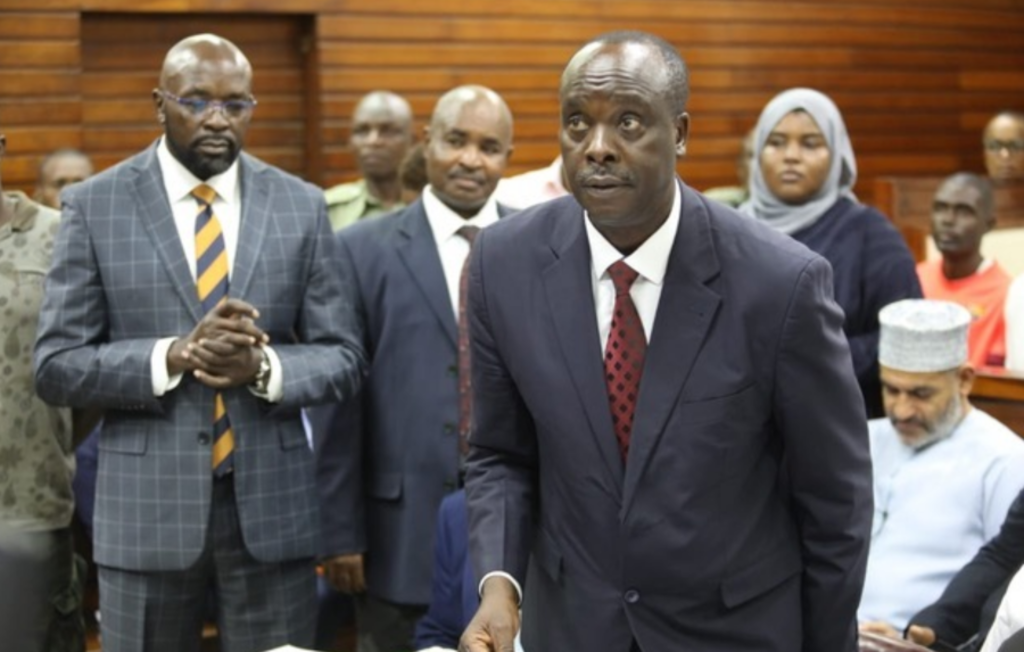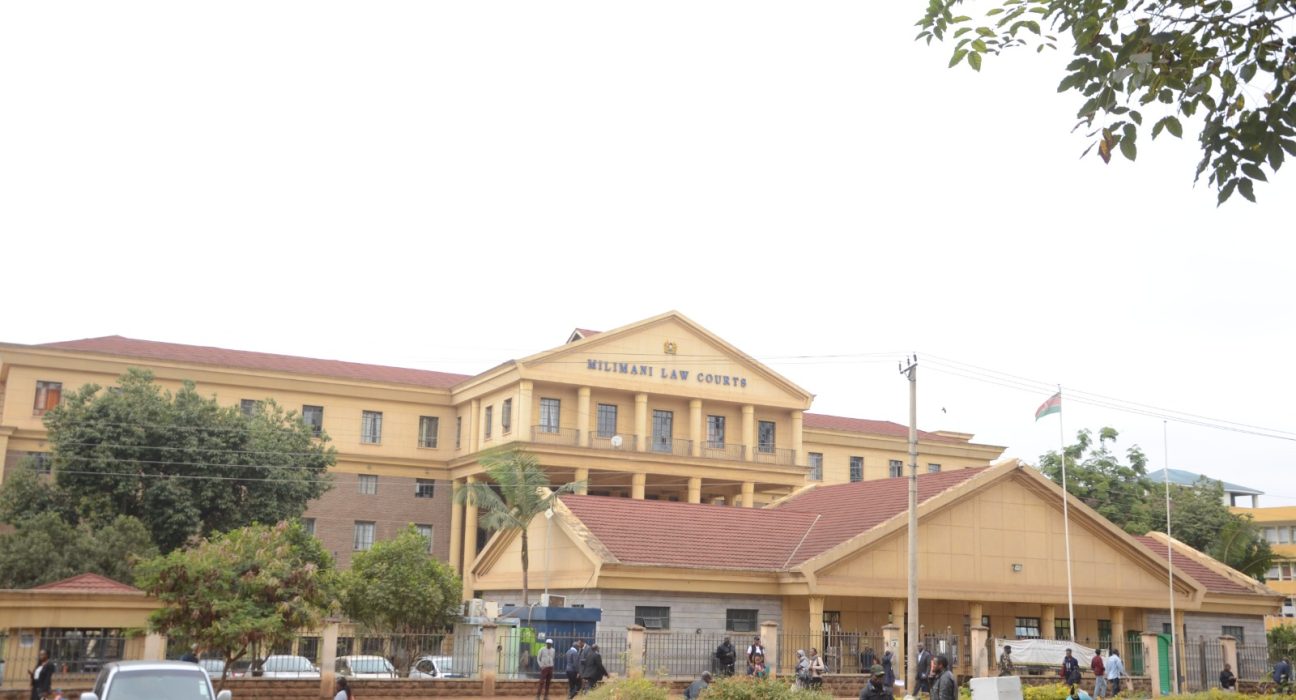
The High Court has dismissed a constitutional petition seeking to block four senior political figures and advisers from attending Cabinet meetings, ruling that the petitioners failed to provide credible evidence of their alleged permanent inclusion.
Justice Lawrence Mugambi dismissed the petitions that were challenging President William Ruto’s Executive Order No. 2 of 2023, which allegedly allowed the United Democratic Alliance’s Secretary General and two presidential advisers on national security and women’s rights as well as another senior party official, to participate in Cabinet sessions.
Justice Mugambi held that the petitioners relied on newspaper articles rather than primary evidence to prove that a formal Cabinet decision had been made to permanently include the four advisers.
“A newspaper report is secondary evidence… it is not reliable as it can be prone to manipulation,” the judge said, noting that Article 153(1) requires Cabinet decisions to be in writing and no such written record was presented.
While the judge acknowledged that permanent inclusion of non-members into Cabinet meetings would contravene the Constitution, he distinguished this from occasional invitations to experts or advisers on a need basis, which he said is within the President’s discretion.
The court dismissed the petitions for lack of evidence and made no orders as to costs.
“Given that the petitioners did not tender credible proof of permanent inclusion into Cabinet meetings… this consolidated petition must inescapably fail.” The judge ruled.
In the case, the petitioners, Charles Mugane and another litigant, argued that the move was unconstitutional under Article 152 of the Constitution, which defines the composition of the Cabinet.
They claimed the inclusion of the four all non-Cabinet members undermined good governance, bypassed parliamentary oversight, and was motivated by political considerations rather than national interest.
They sought declarations that the attendance of the advisers was “unconstitutional, null and void,” alongside court orders compelling their exclusion and prohibiting future participation.
However, the advisers denied ever being permanent members of the Cabinet, with the UDA Secretary General stating under oath that neither he nor the others had attended such meetings regularly, and that no Cabinet decision formalising their inclusion existed.
The National Security Adviser and the Women’s Rights Adviser argued that their attendance, when invited, was purely advisory and aligned with the President’s constitutional mandate under Article 131 to seek expertise in governance matters.
They pointed to global practices, including in the US, UK, and Canada, where similar advisers attend high-level government meetings without being formal Cabinet members