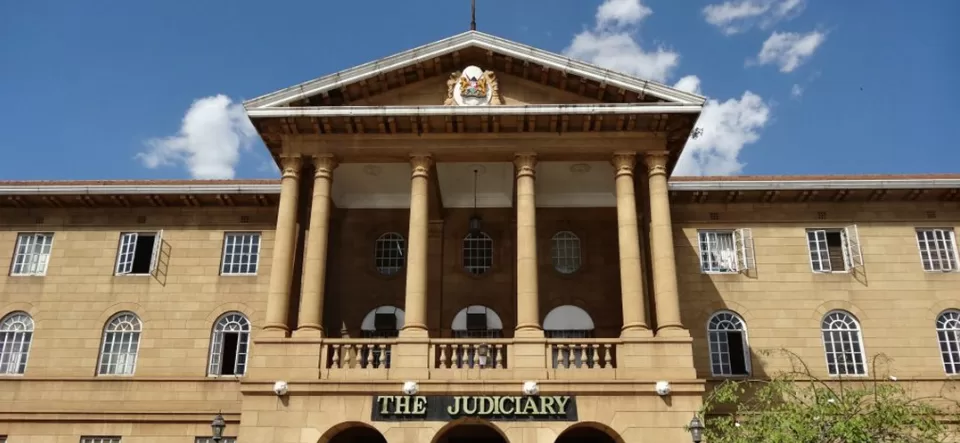
The Court of Appeal has stepped into the escalating legal battle over who controls the careers of police officers, temporarily suspending part of a judgment that had handed the Inspector-General exclusive authority over promotions and dismissals within the National Police Service.
A three-judge bench comprising Justices Daniel Musinga, Mumbi Ngugi and George Odunga ruled that the contested powers will remain frozen pending the hearing and determination of an appeal lodged before the court.
The appeal was filed by the Law Society of Kenya (LSK), challenging a decision delivered on October 30, 2025 by the Employment and Labour Relations Court (ELRC). In that ruling, the ELRC declared that the National Police Service Commission (NPSC) lacked constitutional authority over recruitment, promotion and dismissal of police officers. The court held that those functions fall under the independent command of the National Police Service through the Inspector-General, and went further to bar the NPSC from conducting recruitment. It also nullified recruitment regulations published in September 2025.
Aggrieved by the decision, the LSK, through advocate Duncan Okatch, moved to the appellate court arguing that the ELRC judgment disrupted the constitutional balance established under Articles 245 and 246 of the Constitution. The lawyers’ body maintained that the dispute raises serious and weighty constitutional questions requiring full consideration by the appellate court.
Both the Independent Policing Oversight Authority (IPOA) and the NPSC supported the application, telling the court that the matter has far-reaching implications for ongoing police reforms and is of immense public interest.
On the other hand, the Inspector-General and the National Police Service opposed the bid to suspend the judgment. They argued that the Constitution grants the Inspector-General independent command, including over employment matters. They further informed the court that recruitment of police constables had already been conducted and training had commenced, warning that halting the process could disrupt public safety preparations ahead of the 2027 General Election.
In its ruling, the Court of Appeal found that the intended appeal raises arguable and substantial constitutional issues, particularly on the interpretation of Articles 245 and 246 and the proper division of human resource functions within the police service.
The judges noted that recruitment had already taken place and that trainees were undergoing training, making it impractical to reverse that process at this stage. However, they cautioned that allowing promotions and dismissals to proceed before the appeal is heard could create confusion and lead to potentially irreversible consequences.
As a result, the court suspended the exercise of powers relating to promotion and dismissal of police officers until the appeal is heard and determined. The bench clarified that it was not reverting those powers to the NPSC, but merely freezing their exercise in the interim.
The Court of Appeal directed that the appeal be filed and heard on priority within three months, citing the public importance and urgency of the matter. No order was made as to costs.
The pending appeal is now set to determine a fundamental constitutional question that sits at the heart of police reforms: who ultimately controls the career progression and discipline of police officers — the Inspector-General or the National Police Service Commission.