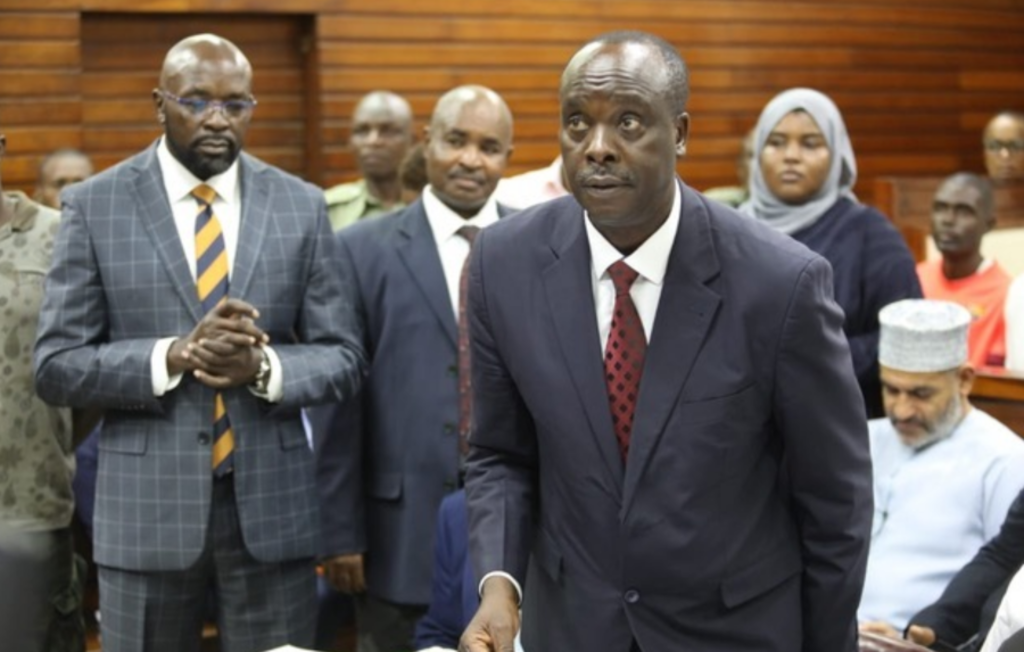
Chief Justice Martha Koome has officially launched the Judiciary Committee on Elections (JCE) Operational Plan 2025–2029, marking the beginning of preparations for the 2027 electoral dispute resolution cycle.
Speaking during the twin event that also saw the handover of JCE leadership from Justice Mohammed Ibrahim to Justice Njoki Ndung’u, the Chief Justice hailed the outgoing team for its steadfast handling of the 2022 electoral cycle. She lauded key achievements including digitisation of electoral dispute processes, timely resolution of 536 election-related cases, and the development of critical materials such as a Bench Book and Case Digest.
“This moment marks both continuity and renewal,” said Justice Koome. “The new Plan is not just a guide to 2027, but a blueprint to further strengthen electoral justice in Kenya.”
Justice Koome emphasized the evolving challenges of each election cycle, citing the need to combat disinformation, modernise digital court processes, and push for timely law reform. She noted that resource constraints during the 2022 cycle had impacted training and logistical deployment of judges, calling for early resource mobilisation this time round.
The Chief Justice reaffirmed the Judiciary’s commitment to impartiality, efficiency, and integrity in adjudicating electoral disputes, noting that Kenya’s model had inspired judiciaries in Zambia and Malawi.
She extended appreciation to development partners including ELGIA, IFES, and ICJ-Kenya, and urged continued collaboration with institutions such as the IEBC, Law Society of Kenya, and Parliament.
Justice Njoki Ndung’u, now at the helm of the JCE, takes over as the Judiciary shifts gears into training, law reform advocacy, and stakeholder engagement in preparation for the 2027 General Election.
“The Judiciary stands ready,” concluded CJ Koome, “to safeguard Kenya’s constitutional democracy and deliver a peaceful, just, and credible electoral process.”