President William Ruto has suffered a setback after the High Court issued conservatory orders stopping the implementation of the health cooperation framework between Kenya and the United States pending the hearing and determination of a constitutional petition.
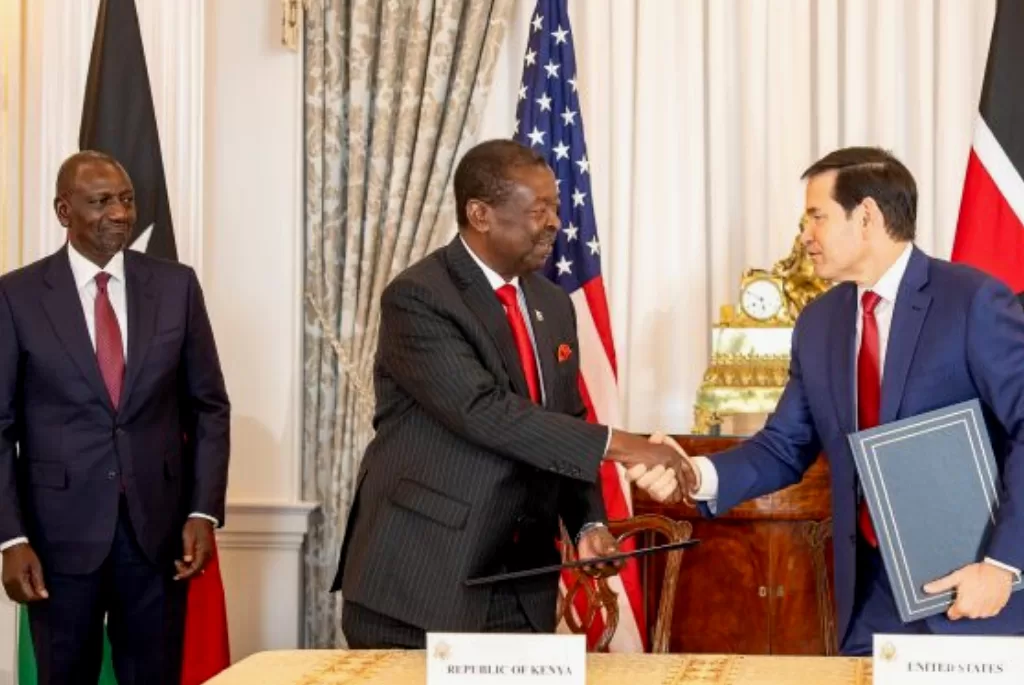
The court barred the government from operationalising, executing, or taking any steps to implement the framework in its entirety, including spending public funds, entering into contracts, or rolling out policy measures linked to the agreement signed on December 4, 2025.
The orders were issued after the court certified the case as urgent, effectively freezing the multi-billion-shilling health arrangement until the constitutional issues raised are fully heard and determined .
The petition was filed by activist Okiya Omtatah, who argues that the framework was negotiated and signed secretly by the Executive without public participation or parliamentary approval.
Omtatah contends that despite being labelled a “framework,” the document creates binding financial and policy obligations and therefore qualifies as a treaty under the Constitution, requiring ratification by Parliament.
According to the court filings, the framework commits Kenya to a five-year programme estimated at USD 1.6 billion, with escalating domestic co-financing obligations that could place a heavy burden on the national budget.
The petitioner argues that the agreement violates constitutional principles on sovereignty, public participation, fiscal accountability, and transparency, as well as statutory requirements under the Treaty Making and Ratification Act and the Public Finance Management Act.
He further claims the framework exposes Kenya’s regulatory autonomy by requiring reliance on U.S. approvals in the health sector, potentially undermining the mandate of local regulatory bodies.
Concerns have also been raised over data protection, with the petition warning that the framework allows extensive foreign access to sensitive health data without clear legal safeguards.
The respondents named in the case are the Prime Cabinet Secretary and Cabinet Secretary for Foreign and Diaspora Affairs, the Cabinet Secretary for Health, the National Treasury, and the Attorney General, with Katiba Institute joined as an interested party.
The High Court held that the conservatory orders are necessary to preserve the Constitution and prevent potential violations while the case is pending.
The matter will now proceed to a full hearing, where the government will be required to defend the legality and constitutionality of the controversial Kenya–US health framework