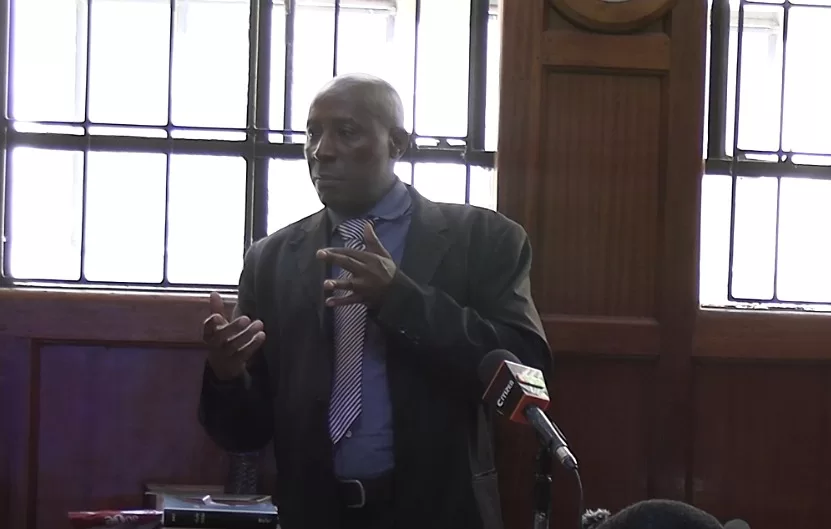
A senior forensic ballistic expert has told a Nairobi court that live ammunition was discharged during the protests in which the late Rex Masai was fatally shot contradicting earlier claims that police only used rubber bullets.
Testifying before trial magistrate Geoffrey Onsarigo, Senior Superintendent of Police and firearms examiner Alex Mdindi Mwandawiro said a bullet fragment recovered from the scene had all the hallmarks of a live rifle round.
“My examination revealed the damaged jacket was part of a rifled bullet, not rubber,” Mwandawiro testified. “The bullet core was missing, but the fragment bore right-hand twist markings and must have come from a live round.”
Mwandawiro explained that on July 1, 2024, the Independent Policing Oversight Authority (IPOA) submitted exhibits to his laboratory for testing, including three pistols and a damaged bullet jacket weighing 0.38 grams. After analysis, he concluded the fragment had been fired from a rifle—not from the pistols provided by DCI Central Police.
He added that the pistols submitted were of a different calibre, making it impossible for them to have discharged the fragment. He further noted that a Ceska pistol, listed in IPOA’s exhibit memo, was never presented to the ballistic laboratory, weakening the integrity of the evidence chain.
The expert said the fragment, identified as Exhibit IPOA A1, could have come from several types of rifles in use globally, including Russian-made rifles, Israeli AK-series weapons, or Kenya’s locally manufactured Chalbi rifles.
Although he admitted under cross-examination that the specific firearm could not be identified, he was categorical that the projectile was from live ammunition.
“That bullet must have come from a live round,” Mwandawiro insisted.
His testimony directly undermines earlier claims in court that no live bullets were fired during the July protests, which ended with the death of 29-year-old Masai.
Separately, Safaricom senior manager Zachary Mburu testified that the company received court orders requiring it to provide call data and geographical location details for several phone numbers between June 18 and 19, 2024. The police also requested registration particulars linked to the numbers.
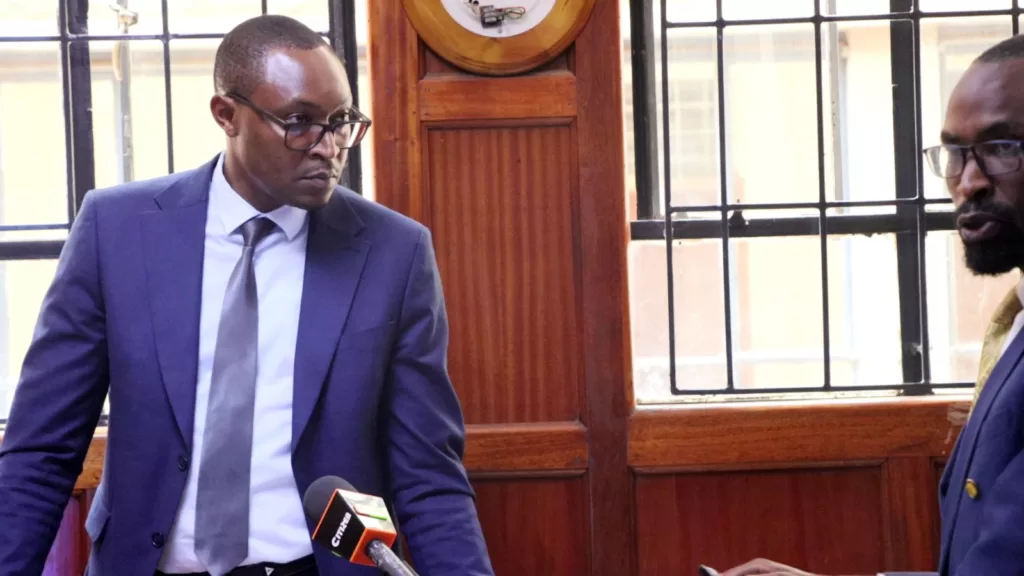
𝘗𝘩𝘰𝘵𝘰 𝘰𝘧 𝘚𝘢𝘧𝘢𝘳𝘪𝘤𝘰𝘮 𝘴𝘦𝘯𝘪𝘰𝘳 𝘮𝘢𝘯𝘢𝘨𝘦𝘳 𝒁𝒂𝒄𝒉𝒂𝒓𝒚 𝑴𝒃𝒖𝒓𝒖 𝘪𝘯 𝘤𝘰𝘶𝘳𝘵
The court heard that mobile phone records placed suspects connected to the ongoing case at key locations within Nairobi’s Central Business District.
One of the numbers, registered under Michael Okello, showed extensive activity on July 18, including a 7:16 a.m. call from Windsor House, Accra Road, near Corner House, with further activity until 8 p.m.
Another number, registered under Isaiah Murangiri, had only one SMS recorded within the CBD during the period. A third line, also registered under Murangiri, showed no data activity.
Mburu further testified that records linked to Benson Thiru Kamau placed him at the KBC Towers from 5 p.m. on the day in question.
Meanwhile, data from Murangiri’s line indicated movement on July 20, with activity logged at St. Ellis House between 11:20 a.m. and 6:21 p.m., before being traced later near Kencom.
Murangiri has been identified as the prime suspect in the murder of Rex Masai.