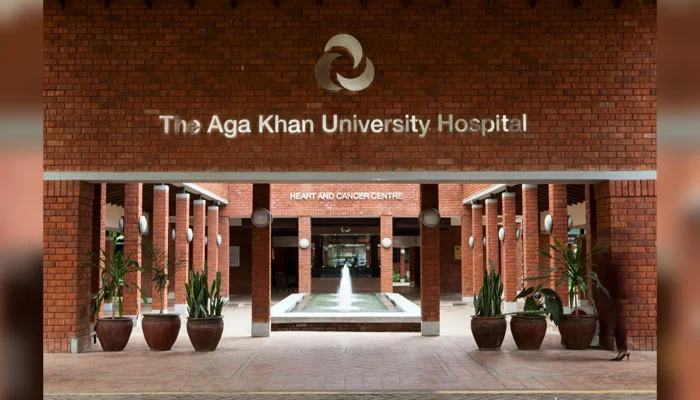
The family of a retired Nigerian Air Force officer has gone to court seeking the immediate release of his remains from Aga Khan University Hospital, Nairobi, accusing the facility of unlawfully detaining the body over a disputed medical bill.
Bidemi Okorodudu, representing the estate of the late Air Vice Marshal Terry O. Okorodudu (Ret.), claims that the hospital has continued to hold the body as security for a bill of Kshs. 9.8 million, a practice she argues is contrary to Kenyan law and public policy.
Through her lawyers, she told the court that the continued detention of the remains violates the dignity of the deceased under Article 28 of the Constitution and has caused the family immense emotional distress, while also risking diplomatic embarrassment between Kenya and Nigeria. The family is seeking ex parte orders compelling the hospital to release the body unconditionally, restraining it from interfering with burial plans, and directing government agencies to facilitate the repatriation of the remains for military interment in Nigeria. They also want the OCS Parklands Police Station to assist in enforcing any orders that may be granted.
The petitioners argue that even if money was owed, the hospital has adequate legal remedies, including filing a civil claim or relying on reciprocal enforcement of judgments between the two countries.
Aga Khan University Hospital, however, has strongly opposed the application, insisting that the remains cannot be released without clearing an outstanding balance of about Kshs. 8 million. In court papers filed by Jackson Awuor, the Patients Services Business Department Manager, the hospital accuses Bidemi Okorodudu of being uncooperative, hostile to staff, and attempting to evade payment despite signing a guarantee of payment during his father’s admission in July 2025.
The hospital details that the retired officer had been admitted with severe heart failure, kidney complications, pulmonary hypertension, chronic liver disease, and other comorbidities that required specialist attention from multiple medical teams. It further accuses the petitioner of clashing with doctors, rejecting recommended treatments, and interfering with medical decisions conduct it says mirrored earlier behavior at Coptic Hospital where the patient had been discharged against medical advice before transfer.
According to Awuor, the bill had risen to more than Kshs. 8 million by the time of Air Vice Marshal Okorodudu’s death on September 9, 2025. He claims that while the petitioner initially promised to keep the balance below Kshs. 1 million, he later reneged and instead demanded a waiver of the full bill, Kshs. 70 million in damages, and over Kshs. 2 million in funeral expenses.
The hospital maintains that releasing the body without settlement or enforceable security would amount to unjust enrichment, prejudice its operations, and infringe on its right to property. It dismissed reliance on Nigeria’s enforcement laws, arguing that the country is not listed under Kenya’s Foreign Judgment (Reciprocal Enforcement) Act.
The hospital has asked the court to compel the petitioner to provide a binding undertaking for the debt before release, stressing that unpaid bills from foreign patients strain resources and affect service delivery.
The court will now determine whether the hospital can lawfully hold onto the remains in pursuit of payment or if the family will succeed in securing immediate repatriation for military burial in Nigeria.