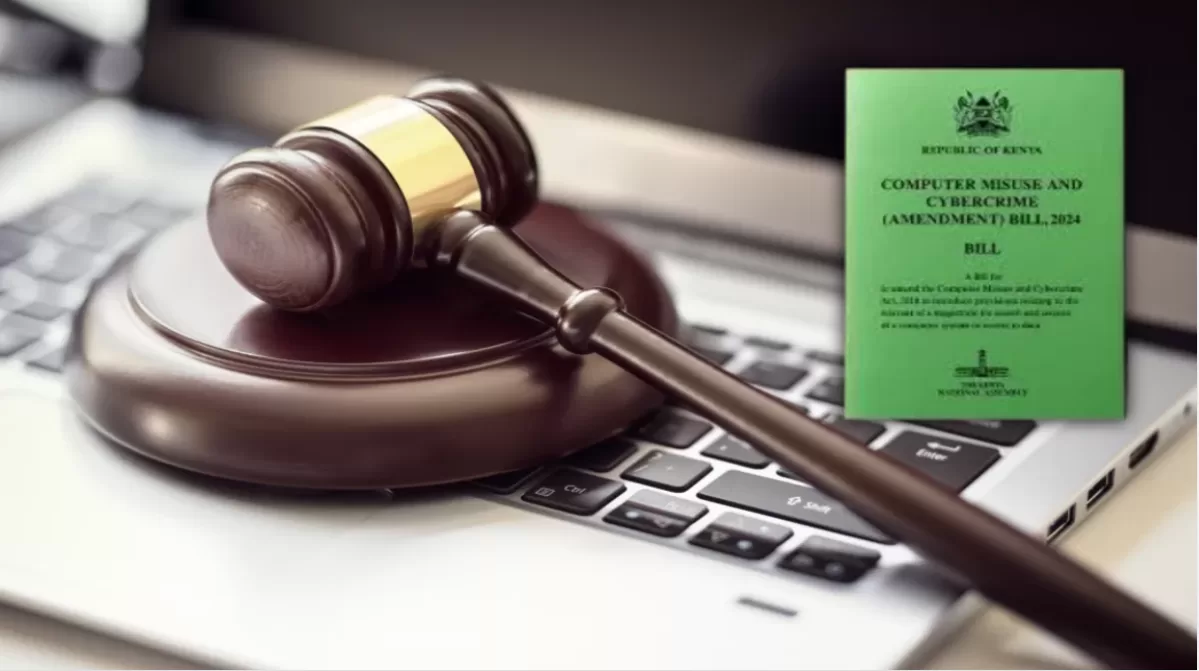
The Court of Appeal has declared two provisions of the Computer Misuse and Cyber crimes Act unconstitutional in a landmark decision that clarifies how online conduct should be regulated in Kenya.
In a judgement delivered by a three-judge bench comprising Justices P. O. Kiage, A. O. Muchelule and W. Korir, the court ruled that Sections 22 and 23 of the Computer Misuse and Cyber crimes Act, 2018 are unconstitutional for being overly broad and capable of criminalising innocent conduct.
The two sections deal with offences relating to false publications and the publication of false information.
The decision arose from an appeal filed by the Bloggers Association of Kenya (BAKE), which had challenged a 2020 High Court decision by Justice James Makau that upheld the constitutionality of the law.
In its appeal, BAKE argued that several provisions of the Act violated constitutional rights including freedom of expression, privacy and the right to a fair trial.
However, the appellate court largely agreed with the High Court and upheld most parts of the legislation, finding that Parliament acted within its mandate to regulate conduct in cyberspace.
The judges held that criminal law can legitimately apply to online platforms to protect members of the public from harmful conduct such as harassment, fraud and other digital offences.
“Cyberspace cannot be a law-free environment, a virtual jungle or wild west devoid of criminal sanctions essential to deter its abuse,” the judges stated.
The bench also rejected BAKE’s challenge to Section 28 of the Act, which criminalises cybersquatting, ruling that the provision serves a legitimate purpose by protecting intellectual property rights and preventing deceptive practices in the digital economy.
According to the court, cybersquatting undermines trust in digital commerce and interferes with proprietary rights, and therefore does not deserve constitutional protection.
However, the judges found that Sections 22 and 23 were too widely framed and could potentially capture individuals who had no criminal intent.
“In the end, this appeal partially succeeds to the extent that we find Sections 22 and 23 of the Act unconstitutional for being too broad to the extent that they are likely to net innocent persons,” the court ruled.
Apart from that finding, all other grounds of appeal were dismissed.
The Court of Appeal also issued guidance to courts and investigative agencies implementing the law, cautioning that surveillance and interception powers must be exercised carefully.
The judges directed that applications seeking such orders must clearly specify the offence under investigation, the duration of interception and the manner in which collected data will be examined, stored and eventually destroyed.
They further warned that the law could be misused for political purposes if applied recklessly and urged courts to carefully scrutinise every request for interception orders.
“Courts must be alive and alert to the risk that the Act can be deployed for political purposes and must carefully scrutinise every application before granting any order,” the bench said.