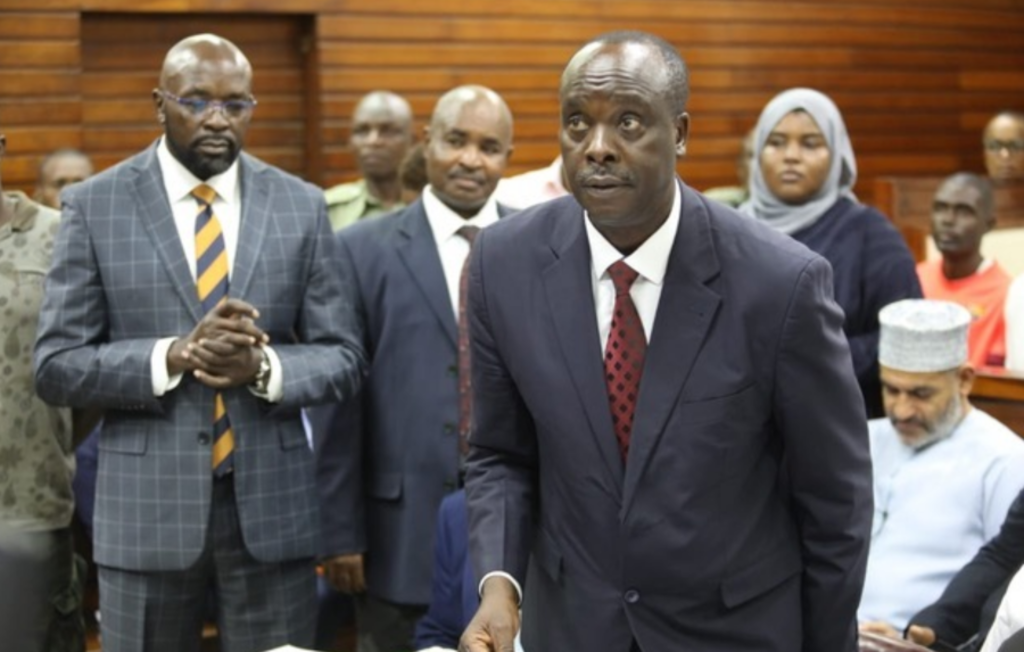
OCS Samson Taalam, one of the accused in the murder of blogger Albert Ojwang, has filed a constitutional petition challenging the Probation of Offenders Act for lacking time limits in the preparation of pre-bail reports a legal gap he says has left him unlawfully detained for a long period of time.
Through Lawyer Danstan Omari, Taalam is asking the court to declare the Probation of Offenders Act (Cap 64) unconstitutional for failing to prescribe clear timelines for the preparation of pre-bail reports by probation officers.
The case stems from a ruling on June 24, 2025, when a Kibera court ordered a pre-bail report before ruling on Taalam’s bond application.
According to the petition, the probation officer in court requested 45 days to compile the report which Talaam argues is a delay and violation of his constitutional rights.
Taalam argues that the delay undermines his right to expeditious bail determination, access to justice, and fair administrative action, all guaranteed under Articles 47, 48, 49, and 50 of the Constitution.
He argues that the 45-day detention request “shocking and unconstitutional,” especially considering the court’s discretion relies heavily on the pre-bail report to determine whether an accused can be released pending trial.
“The absence of statutory timelines has led to unreasonable delays in the preparation and submission of pre-bail reports, causing prolonged detention,” reads part of the petition.
The officer now wants the court to declare the 45-day delay unconstitutional and the Probation Act unconstitutional for lacking binding timelines.
Further, he wants the court to Compel the Ministry of Interior and the Director of Probation to introduce legal amendments and interim guidelines setting maximum timelines for pre-bail report completion.
Taalam is currently facing murder charges alongside five others, over the death of blogger Albert Ojwang an incident that has triggered public outrage over alleged police brutality.
The petition raises critical questions over procedural justice for pre-trial detainees, especially those accused of capital offences, and sets the stage for a potential landmark decision on bail processes in Kenya’s criminal justice system.